How to Do Restaurant SEO in Canada (Without Wasting Cash)
What actually moves the needle for Canadian restaurant SEO in 2027
Restaurant SEO in 2027 will make a difference when your Google Business Profile, website, reviews, local reputation, menu and ordering path all say the same story: you are important to the search, you are truly local, you are reliable and you are easy to pick. I mean ofcourse you cannot control everything, especially distance but you can build stronger relevance and prominence.
I know that a restaurant owner already has plenty to worry about: food costs, staffing, suppliers, customers, delivery platforms and the mysterious disappearance of teaspoons from the kitchen. But local search also deserves attention because a customer searching for "Indian restaurant near me" or "best dosa in Mississauga" is not just casually browsing. They are usually looking for something away.
And in 2027 restaurants that understand that intent will have an advantage.
What does restaurant seo actually mean for restaurants?
Restaurant SEO means making sure your business shows up in local search results when people look for food in your area. It’s about helping search engines understand what kind of food you serve, where your restaurant is and why someone should pick you over others.
Google says local results depend on three things: relevance, distance and prominence.
Think of it like a restaurant reservation.
Distance is how far your restaurant is from the person searching. It’s the location of the table.
Relevance is whether your restaurant actually offers what the customer is looking for. If someone searches for "sushi near me" your site should clearly show you serve sushi.
Prominence is your reputation. It’s how well-known your restaurant is, how reviews you have and how trusted you seem.
You can’t move your restaurant closer to every person who searches but you can make your restaurant more relevant by using the right keywords and clear descriptions. You can also build local prominence by encouraging reviews getting listed in local directories and being active on social media.
That’s where your 2027 SEO strategy should focus. Make your restaurant easy to find, easy to understand and easy to trust.
How does Google decide which restaurants appear in the local 3-pack?
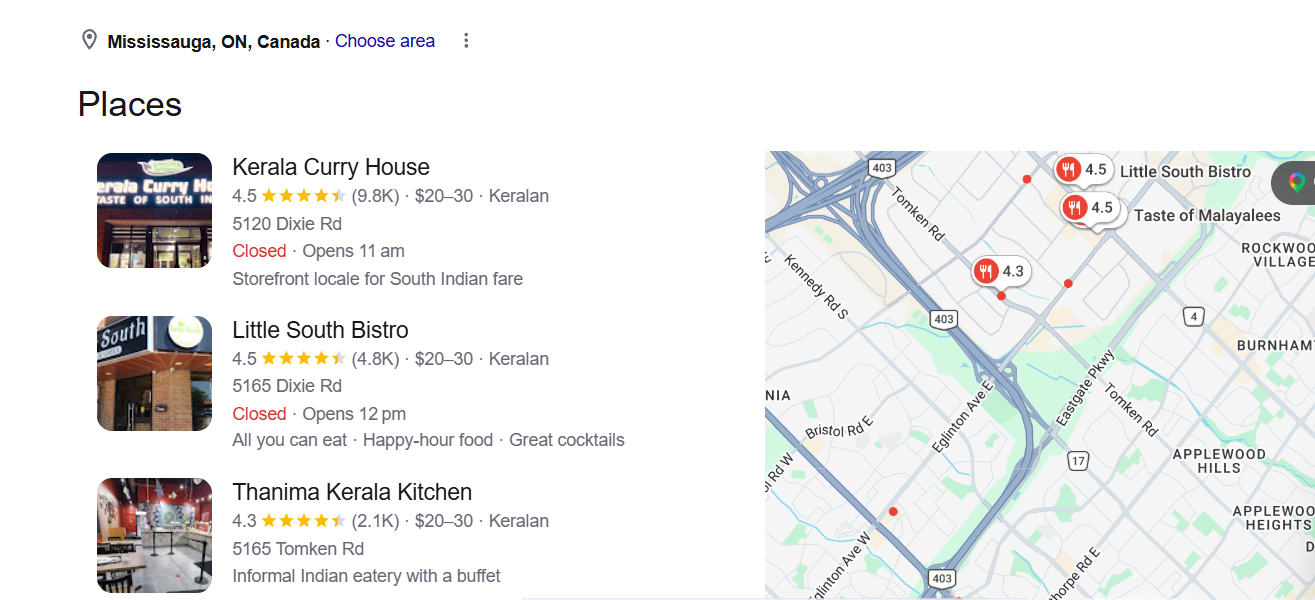
Google explains that, relevance measures how a Business Profile matches a search, distance considers how the business is from the person searching, prominence reflects how famous the business is.
This gives restaurant owners an immediate framework. The restaurant must show three things clearly:
What the restaurant is
Where the restaurant is and
Why people should trust the restaurant.
If the restaurant's profile only says "Restaurant " Google gets little context.
If the website, Business Profile, reviews, menu and local mentions all say that the restaurant is a South restaurant in Brampton that offers vegetarian dishes, takeout, catering and online ordering then the picture is much clearer.
That clarity is valuable.
How should I optimize my Google Business Profile for a restaurant?
Your Google Business Profile is the foundation of restaurant visibility. Google recommends keeping business information complete and accurate including your address, hours, business category, attributes and other details customers need.
Start with the basics:
Use the business name.
Select the accurate primary category.
Add secondary categories where appropriate.
Keep your address and phone number accurate.
Update holiday hours.
Add your website.
Link customers to the menu.
Make ordering and reservation options easy to find.
Upload current high-quality food and restaurant photos.
Keep attributes accurate.
Do not treat the Google Business Profile as something you create once and forget.
Restaurants changes menus, hours, services and promotions constantly. Your Google Business Profile must reflect reality.
Why are restaurant reviews becoming even more important?

BrightLocals 2026 Local Consumer Review Survey found that 97 percent of consumers read restaurant reviews for businesses while 74 percent said they only care about restaurant reviews written within the last three months.
Restaurant owners should pay attention to that second number.
A restaurant with 800 reviews but no recent customer activity may not have the effect as a restaurant with a good flow of recent detailed reviews.
The same research, from BrightLocal also found that 47 percent of people think that 20 reviews is not enough and 31 percent said they would only use a business that has a rating of 4.5 stars or higher.
The message is not "get five-star reviews no matter what."
The message is to keep giving an experience that people truly want to talk about.
Then make it simple for them to share feedback.
How should restaurants build a better review strategy?
Do not bombard your customers with an automated message asking them for “a 5-star review.”
Instead, ask for genuine feedback.
Here’s what you can do:
Determine the right time for this after positive interaction with your customers.
Provide customers with the review link.
Ask for genuine feedback rather than rating.
Be consistent in your response to all the reviews.
Leverage the recurrent feedback to enhance the overall restaurant experience.
According to BrightLocal in 2026, 89% of consumers expected the businesses to respond to their reviews, while 42% indicated their unwillingness to visit the business ignoring the feedback received on the online platform.
It will give you another chance to add some humanity to your brand voice.
“Thanks for visiting our restaurant” sounds good.
However, “Thanks, Priya! It was nice seeing you and tasting masala dosa” would sound more human.
How can restaurant seo make your website more useful?
The website needs to be responsive to customer queries that are being asked by hungry customers.
Where are you located?
What do you have on the menu?
What are the prices like?
Are there vegetarian dishes available?
Can we deliver the food?
Can I order food from the website?
Do you take bookings?
Do you cater to events?
Do you have gluten-free or halal food available?
The better you respond to customer queries, the less effort is required of the customer.
This is a good user experience as well as SEO.
Should restaurants create separate location pages?
If you have your business in multiple locations, it is worth considering.
Having one restaurant in Brampton doesn’t mean that by making pages for Toronto, Mississauga, Oakville, Vaughan, and all nearby neighborhoods, you will get five restaurants automatically.
Location pages should be created only in cases when there is a clear connection to your business.
Every location page should include some local information instead of copying the same paragraph but changing the city name.
Some ideas for useful location information may be:
Exact location and contact information
Parking details
Landmarks around the location
Service area
Menu details
Catering services
Pickup and delivery services
Questions from local customers
Useful information is always better than repeating the same text on every page.
How important are local links and community mentions?
Local prominence is, to some extent, based on proof that your business exists outside of your website.
Google explains that prominence can be affected by information such as backlinks from other sites as well as the number of reviews that a business receives.
For example, some sources of local links for a restaurant in Canada could include:
Local food sites
Local tourism websites
Local community organizations
Websites with event listings
Local newspapers
Business organizations
Cultural organizations
Colleges and universities
Food bloggers
Charitable relationships
You do not have to get 10,000 random backlinks.
You have to create good reasons for these organizations to mention you.
Sponsor a local event. Host a cultural meal. Form a partnership with a local organization. Attend a food festival.
And get mentioned.
How can restaurant management software support local SEO?
Whilst restaurant management software won’t get you directly onto the Google 3-pack, it can help develop the journey that local customers will take to convert from visibility.
Once someone has found your restaurant:
They will search Google, land on your website, look at your menu, order and then eat! You want them to come back.
All of this plays a role.
Afto’s restaurant platform can be used as part of your growth infrastructure. The platform integrates online ordering, kitchen, delivery/pickup, customer engagement and loyalty.
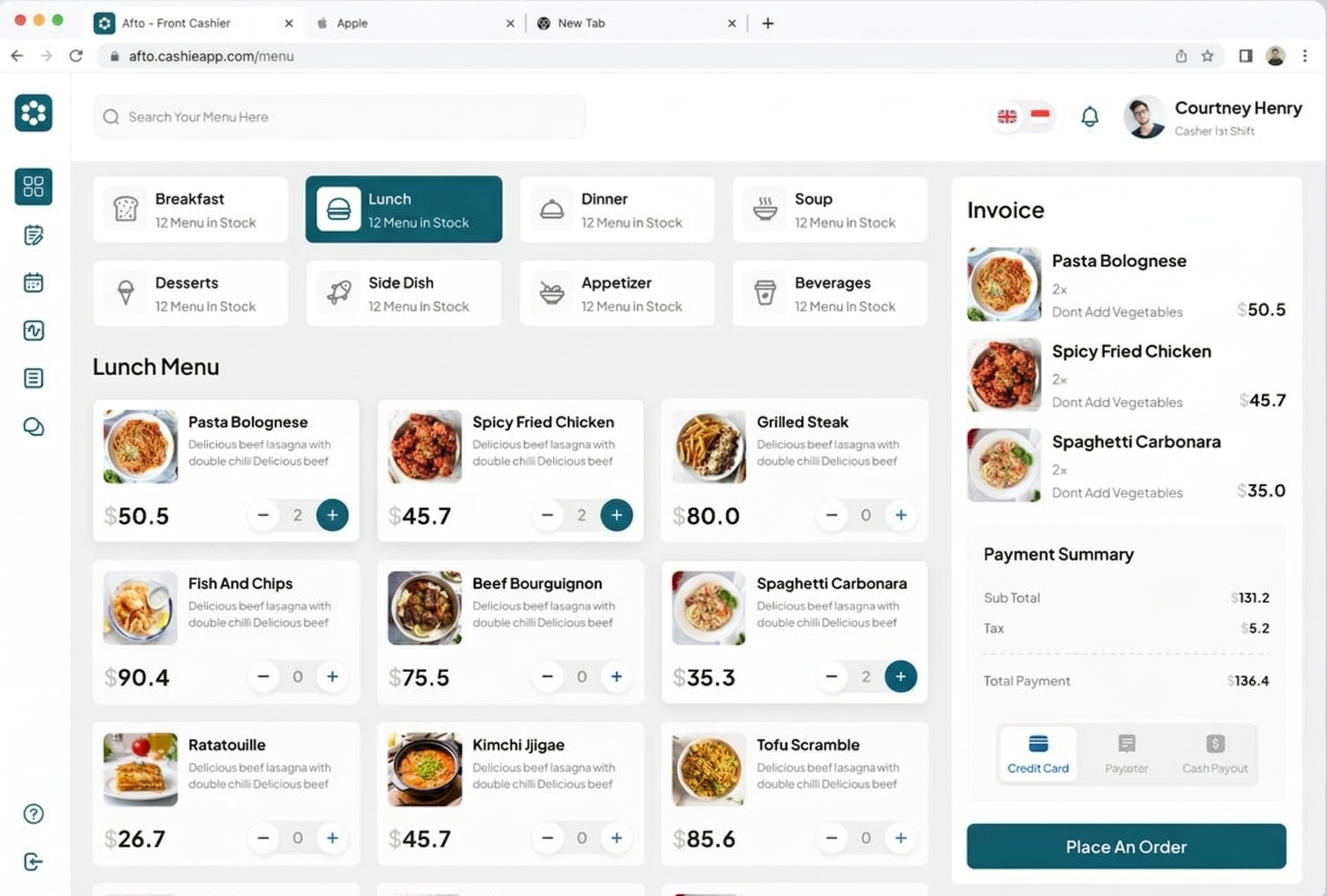
All of these elements are integrated so that you have one system for managing your:
Website,
Ordering,
Kitchen,
Delivery and
Customer retention.
For restaurant investing in SEO that creates important advantage: traffic from search has somewhere useful to go.
Customer should not discover restaurant on Google. Then have to figure out what happens next.
Information should be clear.
Menu should be accessible.
Ordering path should be simple.
Restaurant should have a system, for bringing that customer back.
That is where SEO stops being a visibility strategy and starts becoming a revenue strategy.
How can loyalty card programs for restaurants turn SEO traffic into repeat customers?
Here is the cold hard truth about SEO:
One visit is not sufficient.
But it's when that customer returns that the economics really change.
Loyalty card programs for restaurants is the key here.
Afto integrates its restaurant platform with Customer Loyalty Programme Loyalty Points and special offers. The restaurant platform also features Afto's AI enabled WhatsApp Campaigns which are aimed at bringing customers back.
That creates a simple loop:
Google search → first order → loyalty reward → second order → repeat customer.
The first interaction may come from Google.
The next one does not have to.
A familiar guest who is already a fan of your restaurant can be served a targeted offer, a meal they have ordered before, or interact with your brand in some other way.
Afto's restaurant page provides an example of a customer where loyalty rewards and automated reorder alerts resulted in a 30% revenue increase in 90 days.
Again, that's a customer result we've reported, not a promise to every restaurant.
The lesson to learn is this: Never create a marketing system that keeps paying to re-acquire the same customer.
What role will AI search play in restaurant discovery in 2027?
People are turning to AI tools to find local businesses AI tools like ChatGPT have become a major source of local recommendations.
Bright Local's 2026 research revealed that many people are already using AI tools to discover local businesses.
That changes the question.
Not just "How do I rank for this keyword?"
Ask:
Can my digital presence be strong enough that an assistant trying to find my business would recommend it?
Suppose an AI assistant were to search for a restaurant I'd like. Would the information I've provided online lead to the assistant recommending my restaurant?
That means your business information has to be clear and consistent.
A description of your cuisine, where your restaurant is, what you do, your menu, specialties, and customer experience.
Your reviews should reinforce those facts naturally. Your local mentions should support your reputation. The machine should not have to guess.
What structured data should restaurants use?
Structured data allows search engines to understand your site.
Find local business structured data documentation explains how to use business information and opening hours.
Structured data for restaurant websites can clarify to search engines what the web page represents.
The important word is appropriate.
Do not include facts or figures that are not precise or visible in the data provided in structured data.
What are the biggest local SEO mistakes restaurants make?
The greatest mistake is to equate activity with achievement.
Post a comment on every social media day is activity.
Publishing 20 blog articles that nobody cares about is action.
Adding hundreds of keywords is activity.
Growth equates to having more local diners, becoming fans of your restaurant.
Be aware of these issues:
An incomplete Google Business Profile
Wrong holiday hours
Outdated menus
Poor mobile experience
Missing location information
Lack of regular or effective review activities
No direct online ordering path
No local website authority
Duplicate or thin location pages
Disregarding customer feedback
Measuring rankings without measuring revenue
In a restaurant business, you don't earn for the eyes.
It earns you money when customers buy, come, book and come back.
How should restaurants measure local SEO performance?
Rankings matter but they're not the finish line.
Measure the business results of:
Google Business Profile activities
Local search website visits
Calls
Direction requests
Menu views
Reservations
Online orders
New customers
Repeat customers
Revenue from local campaigns
You can't rank for a high-volume keyword just by having a restaurant that is in third place.
If position three produces 50 profitable customers and position one produces none, the spreadsheet has already answered the question.
Measure what matters.
What is the 90-day local SEO plan for a Canadian restaurant?
Days 1-30: Repairing the foundation
Verify your Google Business Profile.
Correct your business information.
Update regular and holiday hours.
Improve your categories.
Add current photos.
Make your menu easy to access.
Test on-the-go ordering and reservation journey.
Days 31-60: Build trust
Create a consistent review-request process.
Respond to existing reviews.
Improve important service and location pages.
Add useful customer-focused content.
Build relationships with relevant local organizations.
Earn legitimate local mentions.
Days 61-90: Connect search to revenue
Measure calls and direction requests.
Track online orders.
Identify pages generating commercial intent.
Improve weak conversion points.
Compare new and returning customers.
Cease investing in content which fails to generate any significant business result.
Conclusion: What will actually move the needle for restaurant seo in 2027?
The answer is surprisingly unglamorous.
Be relevant. Be local. Be trusted. Be easy to buy.
Google states that local ranking is most closely related to relevance, distance and prominence.
Therefore don't kick off your 2027 plan with "How can we get more keywords?"
Ask a Better Question:
"Why would someone searching for a restaurant similar to ours pick ours over the three restaurants Google shows first?"
Then build the evidence.
Better information.
Better reviews.
Better local reputation.
Better customer experience
Better ordering.
That's the type of SEO strategy that endures algorithm shifts.
Share this article
Help others discover this content
Ready to automate your business?
Join hundreds of businesses using Afto to streamline their operations and boost revenue.