7 Promotion Ideas That Actually Increase Orders for Independent Canadian Restaurants
The best restaurant promotions will give your customers a reason to order, boost sales in slower service periods and encourage them to come back. However, independent restaurants in Canada will benefit from having simple, easy to understand restaurant promotions that align with a clear business goal.
That balance matters. Restaurants Canada reported in August 2026 that affordability is a moderate or major consideration for more than eight in ten Canadians when choosing where to eat, while restaurant operators continue to face pressure from food, labour, and other operating costs. A promotion should therefore communicate value—not automatically mean a deep discount.
Below are seven practical restaurant promotion ideas you can adapt to a café, neighbourhood bistro, family restaurant, quick-service business, or independent dining group. Each idea includes how to run it, when it works best, and what to measure.
1. Create limited-time menu offers around seasonal moments
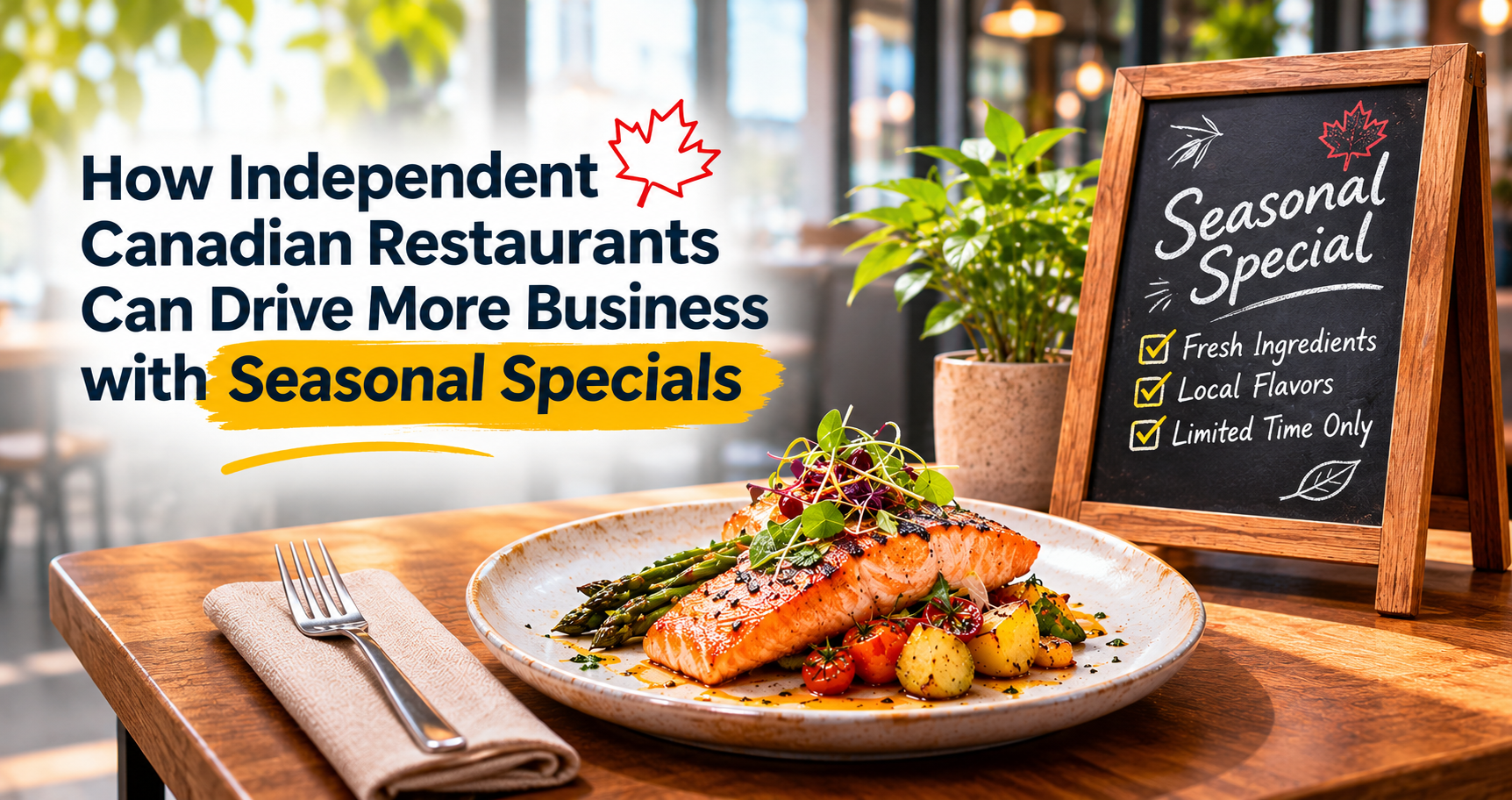
A limited-time offer gives customers a reason to order now rather than postpone the decision. Build a short promotion around a seasonal ingredient, local event, holiday, sports weekend, or a new menu item. The offer could be a seasonal bowl, a special dessert, a weekend brunch plate, or a themed family meal.
How to put it into practice:
● Choose one item that is easy for the kitchen to prepare consistently and that has a contribution margin you understand.
● Give the offer a clear start and end date. A genuine deadline makes the promotion easier to communicate.
● Use one strong food photograph and a short description that explains what makes the item different.
● Promote it through your website, social channels, email or SMS list, and in-store signage.
For example, a Toronto neighbourhood restaurant could run a Friday-to-Sunday maple-glazed salmon special in autumn, while a Vancouver café might introduce a limited-run seasonal latte and pastry pairing. Keep the offer specific to your menu and local audience.
Measure units sold, incremental revenue, food cost, and whether customers added a drink, side, or dessert. If the promotion sells well but produces little contribution after ingredient and labour costs, revise the price or portion before repeating it.
2. Build meal bundles that make ordering easier
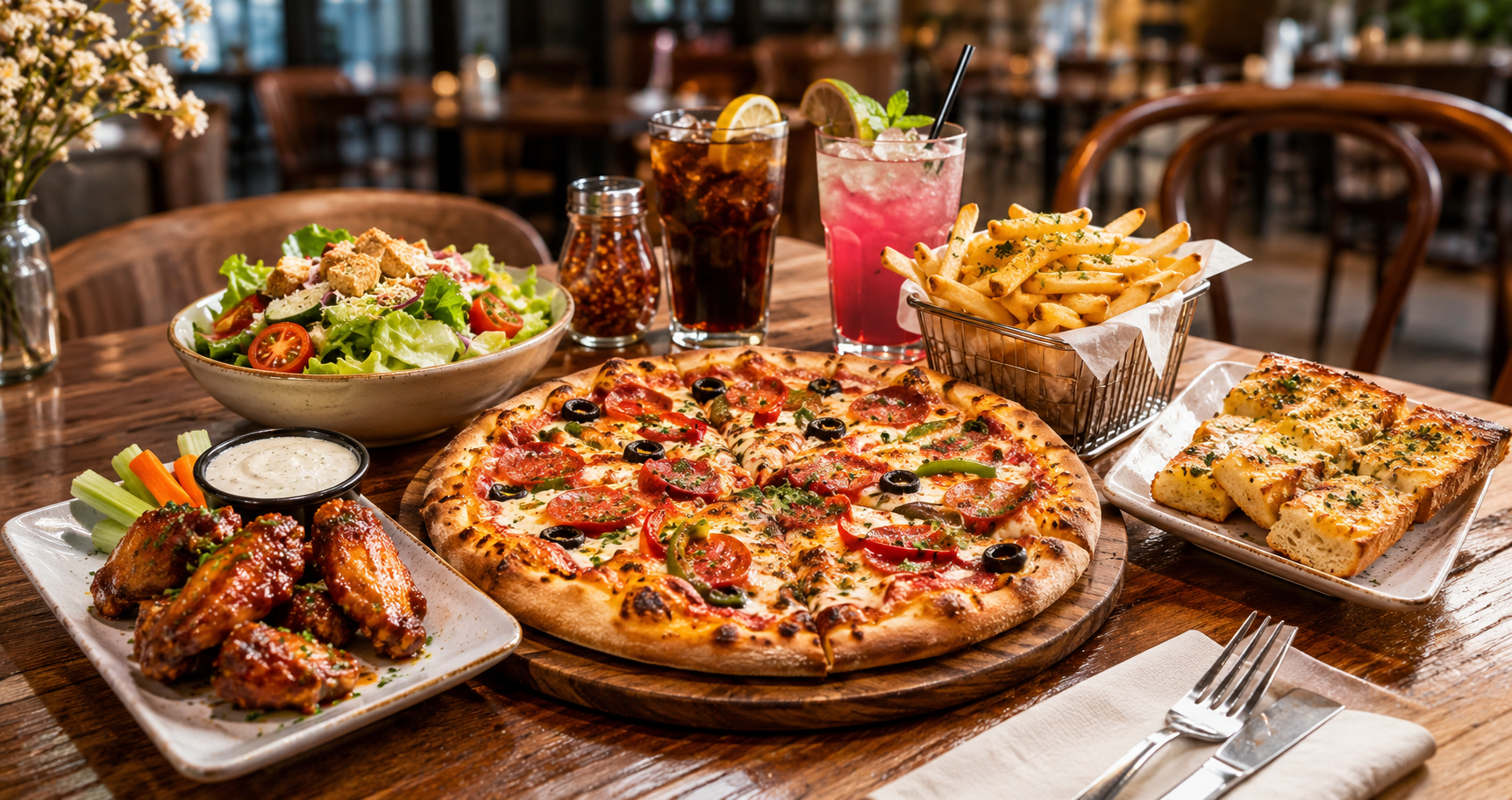
Bundles can increase average order value by combining complementary items into one convenient choice. Instead of discounting every dish, create a meal combination that feels complete and offers a modest, clearly communicated saving compared with buying each item separately.
Bundle formats to test:
● Lunch combo: a main, side, and non-alcoholic drink.
● Family meal: mains and shareable sides sized for a household.
● Date-night set: two mains, one shared starter, and dessert.
● Group-order pack: a mix of best-selling dishes for an office lunch or small gathering.
Use items that complement one another and are operationally practical. A bundle should not rely on a slow, complicated preparation step during peak service. Check the full ingredient cost, packaging, applicable taxes, platform fees, and labour before setting the price.
Track average order value, bundle take-up rate, gross contribution per order, and add-on purchases. Compare the results with similar orders that do not include the bundle.
3. Use daypart promotions to fill quieter hours
A promotion does not always need to bring in more customers overall. Sometimes the better opportunity is to attract a few more orders during a slow period when the kitchen and team already have capacity. Review sales by hour and day before choosing the offer.
Examples include:
● A weekday lunch express menu for nearby offices and workers.
● A mid-afternoon coffee-and-snack pairing for cafés.
● A family early-dinner special on traditionally quieter weekdays.
● A late-evening takeaway combo for customers who order after the main dinner rush.
Set a clear redemption window so the promotion supports the service period you want to grow. Avoid offering the same deal during already-busy peak hours if it simply discounts orders you would have received anyway.
Measure orders and revenue during the targeted hours, average preparation time, labour requirements, and contribution after the offer. A successful daypart promotion improves the use of available capacity rather than just shifting full-price orders into a discounted window.
4. Launch a simple restaurant loyalty promotion
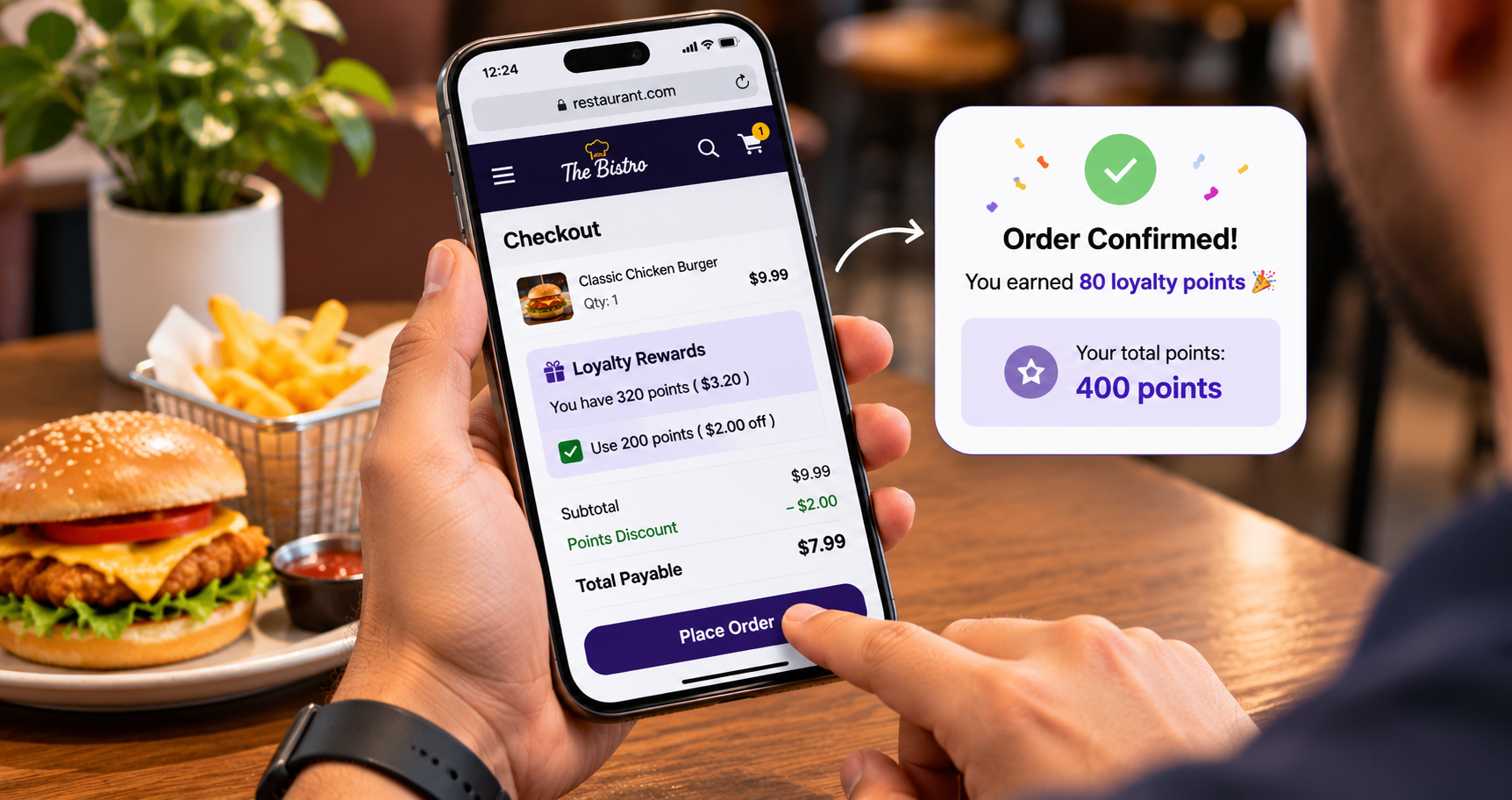
A loyalty promotion gives customers a reason to choose your restaurant again. It can be as simple as points for eligible purchases, a reward after a set number of visits, a birthday offer, or a member-only special. The best structure is easy to understand and rewards behaviour that is valuable to your business.
Ways to make a loyalty offer useful:
● Give new members a modest welcome reward on their first eligible order.
● Reward repeat visits rather than only large one-time purchases.
● Offer a birthday treat or a relevant reward based on customer preferences, where customers have consented to receive messages.
● Create a win-back offer for customers who have not ordered for a defined period.
● Use points or rewards on selected high-margin items when appropriate, rather than automatically discounting the entire menu.
A loyalty program should have clear earning rules, expiry terms if applicable, redemption conditions, and a way to measure whether members return more often. Do not assume that every reward creates incremental sales: compare member behaviour with a suitable baseline and account for the cost of redeemed rewards.
Restaurants Canada and industry research regularly examine loyalty and personalized offers as part of restaurant marketing. The practical takeaway is to make rewards relevant to the guest and sustainable for the restaurant—not simply bigger.
5. Partner with neighbourhood businesses and community events
Independent restaurants have a local advantage: they can build relationships with nearby businesses, community groups, sports clubs, schools, event organizers, and local creators. A partnership can introduce your restaurant to people who already live, work, or spend time in your area.
Partnership ideas:
● Offer a set lunch for employees at a nearby office or coworking space.
● Create a pre-event or post-event menu with a local theatre, venue, or sports club.
● Run a neighbourhood tasting night with a local bakery, coffee roaster, or producer.
● Provide a group-order code for a community organization or local fundraiser.
● Invite a relevant local food creator to try a new menu item, with clear disclosure if the visit is paid or gifted.
Agree on the audience, offer, dates, responsibilities, and how redemptions will be tracked before launching. Use a unique code or landing page for each partner so you can identify which collaborations generate orders.
6. Turn social media engagement into trackable orders
Social media works best when each post gives people a clear next step. Instead of posting only a food photograph, connect the content to a specific offer, menu item, ordering page, or reservation action. Short videos of preparation, staff recommendations, customer favourites, and behind-the-scenes moments can help customers understand what they will get.
A simple campaign structure:
1. Choose one featured dish, bundle, or limited-time promotion.
2. Create a short video or photo carousel that shows the food clearly.
3. Write a direct caption with the offer, availability, location, and ordering instructions.
4. Use a trackable link or campaign code to distinguish social orders from other sales.
5. Review clicks, completed orders, average order value, and campaign cost—not likes alone.
You can also encourage customers to share their experience or tag your restaurant, but make participation optional and follow each platform's promotion rules. If you offer a prize or incentive in exchange for a post or review, disclose the relationship and do not condition rewards on a positive review.
7. Run targeted win-back and repeat-order campaigns
Your existing customer base can be a useful source of repeat business. A win-back campaign reaches customers who have not ordered recently, while a repeat-order reminder gives regular customers a timely reason to return. The message should be relevant, not a generic discount sent to everyone.
Useful segments might include:
● First-time customers who have not placed a second order.
● Regular lunch customers who have not visited during their usual period.
● Customers who frequently order a particular dish or category.
● Lapsed customers who have not ordered for 30, 45, or 60 days—choose a period that fits your normal purchase cycle.
Send a short message that recognizes the customer's likely interest and presents one clear offer or reminder. For example: “Haven't had your usual lunch bowl in a while? Order this week and add a drink for a special price.” Use customer data only where you have the appropriate permission, and comply with Canada's anti-spam requirements for commercial electronic messages.
Track repeat purchase rate, redemption rate, revenue per recipient, unsubscribe or complaint rates, and the contribution generated after the reward cost. A campaign that drives orders but creates excessive discounting or customer complaints needs adjustment.
How do you choose the right restaurant promotion?
Start with the business problem rather than the promotion format. If weekday lunch is quiet, test a daypart offer. If customers order once and disappear, test a loyalty or win-back campaign. If online baskets are small, test a bundle. If awareness is low in your neighbourhood, consider a local partnership or a focused social campaign.
How can restaurant software make promotions easier to manage?
Running promotions manually across social media, email, messaging channels, online ordering, and loyalty records can become difficult as order volume grows. Restaurant software can help bring parts of this work into a more consistent workflow, provided the tools connect to the restaurant's actual ordering and customer data.
For example, a restaurant management software platform may bring together online ordering, customer information, campaign execution, and loyalty activity. A restaurant communication system can also help a team coordinate customer messages and operational updates, although the exact capabilities depend on the product.
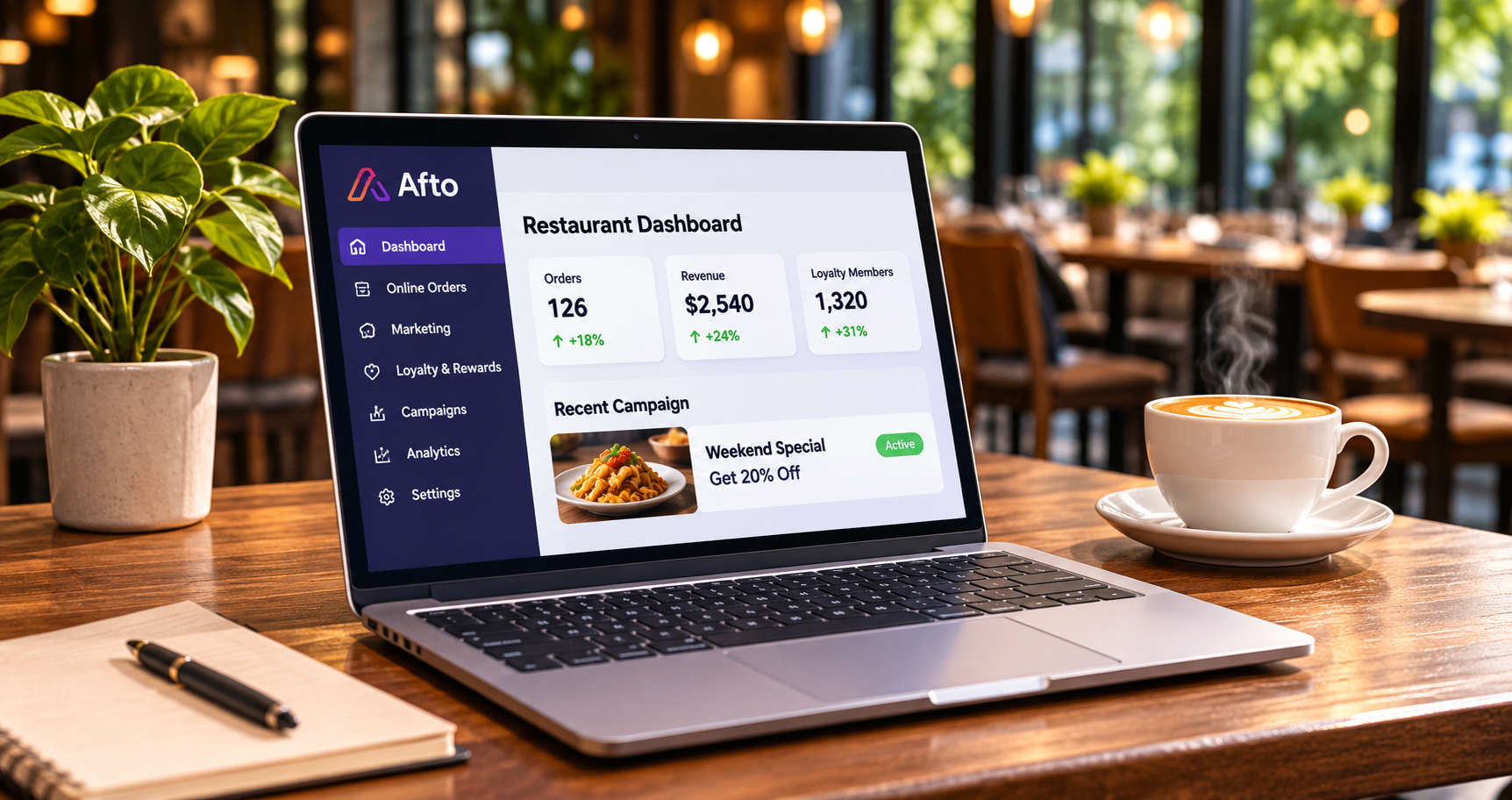
Afto's restaurant solution describes online ordering through a restaurant website, mobile app, WhatsApp, and AI voice, with orders routed to the kitchen. Afto also presents growth and loyalty capabilities such as WhatsApp campaigns, loyalty rewards, and automated social content. Its marketing automation and loyalty products describe campaign creation, customer segmentation, scheduling, points, coupons, and retention triggers. Restaurant owners should confirm the specific integrations, channel availability, consent controls, and plan limits that apply to their business before adopting any platform.
The goal is not to automate every customer interaction. It is to reduce repetitive work, keep offers consistent across channels, and make it easier to see which campaigns produce profitable orders.
How do you measure whether restaurant promotions are working?
Do not judge a promotion only by reach, impressions, or the number of coupons redeemed. Use a small scorecard that connects marketing activity to restaurant performance.
● Orders: How many orders used the offer, and how many were incremental?
● Average order value: Did customers spend more per transaction?
● Contribution: What remained after food, packaging, labour, delivery, platform, and reward costs?
● Repeat purchase rate: Did customers return after the promotion?
● Redemption rate: What share of eligible customers used the offer?
● Customer acquisition cost: How much did it cost to attract each new customer?
● Operational impact: Did the offer create kitchen delays, stock shortages, or service issues?
Where possible, compare the campaign period with a similar period or a group of customers who did not receive the offer. Seasonality, weather, local events, and changes in opening hours can affect results, so avoid attributing every sales movement to the promotion.
Common restaurant promotion mistakes to avoid
● Discounting the entire menu without checking item-level margins.
● Running too many offers at once, making it hard for customers and staff to understand the terms.
● Promoting items that the kitchen cannot prepare consistently during busy periods.
● Using the same message for every customer, regardless of order history or preferences.
● Failing to include clear dates, eligibility rules, exclusions, and redemption instructions.
● Measuring likes and clicks while ignoring completed orders and contribution.
● Continuing a promotion without reviewing its results.
Final thoughts: Make every promotion serve a business goal
The best restaurant promotion ideas are not necessarily the most elaborate or the most heavily discounted. They are the ones that solve a specific business problem: filling a quiet shift, increasing the value of an order, introducing a new dish, or bringing a previous customer back.
Choose one objective, build an offer that your kitchen can deliver, communicate it through the channels your customers use, and measure the result against the cost of running it. Repeat what produces profitable behaviour and change what does not.
If managing online orders, marketing campaigns, and customer rewards across different tools is taking too much time, explore how Afto brings restaurant ordering, growth marketing, and loyalty capabilities together. Book a demo to discuss the workflows and integrations that fit your restaurant.
FAQ section (Frequently Asked Questions)
What is the most effective promotion for a small restaurant?
There is no single best offer for every restaurant. Choose a promotion based on the goal: bundles for average order value, daypart offers for quiet periods, and loyalty or win-back campaigns for repeat visits.
How can a restaurant promote itself without offering large discounts?
Use limited-time menu items, bundles with controlled costs, local partnerships, social content, loyalty points, and targeted offers that provide value without reducing the price of every menu item.
How often should a restaurant run promotions?
Set a cadence that your team can execute consistently and that customers can understand. Review results after each campaign instead of running overlapping offers continuously.
How can restaurant owners measure promotion results?
Track orders, average order value, contribution after costs, redemption, repeat purchase rate, and operational impact. Use campaign codes or tagged links where possible.
Can software help manage restaurant promotions?
Restaurant software may help coordinate online ordering, customer data, campaign communication and loyalty rewards. Confirm the specific features, integrations and consent controls offered by the provider.
Share this article
Help others discover this content
Ready to automate your business?
Join hundreds of businesses using Afto to streamline their operations and boost revenue.